Productivity & work flow: Designing a Desk Setup That really Works
Your desk setup does more than hold your laptop computer and coffee mug. The way you arrange your workspace quietly shapes, I mean, your productiveness & workflows all day long. If your desk fights your physical structure or your wit, you waste focusing on tiny frictions you barely notice. But here's what's interesting:
The good news: small, practical changes to your workspace can brand your work spirit smoother and less tiring. The thing is, this usher walks through how to plan a desk and ergonomic layout that support the way you work, rather of perpetually getting in the way. Certainly,
Start With Your Workflow, Not Your Furniture
Many people buy a desk, add a chair, then hope productiveness follows. That flips the order. Your workflow should drive your apparatus, not the other way about. Before you move a single monitor, get clear on how you in reality piece of work during a normal day.
conceive about your last week. When did you tone lodge or scattered, When, more or less, did you feel “ in flow, ” and? Truth is, those moments usually point to conceal work flow need: faster access to notes, fewer distractions, or less physical stress from distortion and reaching. Besides,
Once you see your patterns, you can shape your workspace to match, pretty much, them, instead of forcing your body and brain to adapt to a random layout. Besides,
Map Your fundamental Productivity & Workflows
To design a helpful desk apparatus, you first need a simple map of your main workflows. Clearly, you don't need a complex system here. You just need to name the case of work you do and what each one needs nearby.
Ask yourself tierce questions and jot down short answers for each type of job you handle most day, like deep focus work, meetings, or admin. Truth is,
- What do I use? Besides, listing tool, apps, line, and devices you range for.
- Where do I get stuck? observation repeat clash points, like hunting for files or cables.
- What attitude am I in? Actually, Sitting, standing, hunched, distortion, or leaning forward? The reality is: also,
This speedy map shows where your desk apparatus support you and where it silently slows you down. Naturally, you can use this to decide what earns infinite in your “ prime zone ” and what can relocation out of the way. Look,
Design Your “ heyday geographical zone ” for Fewer Micro-Frictions
Your peak zone is the area you can reach without tendency or twisting: roughly a half-circle in forepart of you, at arm ’ s length. This is the most valuable real number estate on your desk, and it should serve your most important work flow.
In a high-friction setup, this geographical zone is thorough of random stuff: mail, cables, extra gearing, or yesterday ’ s dishes. Interestingly, in a workflow-friendly apparatus, the heyday geographical zone clench only what you demand for daily core piece of work.
For most people, the prime geographical zone ordinarily includes the keyboard, shiner or trackpad, main admonisher, notebook, and maybe a pen. Usually, everything else should either relocation to the edges or into drawers so your custody and eyes have a open path.
Ergonomics That Protect Your focusing, Not Just Your Back
Ergonomics is often treated ilk a health checkbox, but it has a strong impact on productiveness. Poor posture drains focusing over time. What's more, your wit works harder when your organic structure is tense or in pain, even if you consider you're used to it. Truth is,
A few simpleton ergonomic tweaks can cut that hidden drain and support smoother workflows through the day.
Chair, Desk, and Screen: The Alignment Trio
Start with your professorship height. Really, your feet should rest flat on the floor. Basically, too, your knee should be close to a right slant. If your pes dangle, use a footrest or a sturdy box. Think about it this way: plus, that stalls foot gives your upper body better support. Honestly,
following, align your desk and keyboard acme so your elbow rest around a right slant and your shoulders stay relaxed. No doubt, your wrists should float in a neutral line, not bent up or down. This shuffle long typing sessions less tire.
Finally, set your monitor so the top, pretty much, of the screen is at or slimly below eye level. The truth is: usually, you should be able to looking straight ahead with a gentle downward gaze, not Crane your neck. Here's the bottom line: if you use a laptop, a stand plus an external keyboard and shiner can help a lot. Interestingly,
Movement as a Built-In Part of Your Workflow
A great ergonomic apparatus does not freeze you in one perfective posture. Your physical structure likes motion. Basically, the trick is to develop small motion into your workflows, so you don't sit or stand in one fixed way for hours. Here's the deal,
You can stand for Call, sit for trench focusing, and walk during audio-only meeting. You can property a printer or whiteboard a few stairs away so you have to pedestal and relocation sometimes. These bantam shifts support your energy more stable across the day.
Desk Layout That Matches various Modes of Work
Many, really, citizenry use one desk layout for every kind of task. That's ilk using one tool for every job. Basically, a better approach is to set up “ micro zones ”, really, on or around your desk for different manner of piece of work.
You don't demand a huge office for this. Flush a small desk can support various workflow if you conceive in zones rather of jumble.
Three simpleton zone That Cover Most Workdays
You can keep this very simpleton and still see a big change in how your day feel. These three zones give your productiveness & work flow a open structure.
1. Focusing zone: This sits, pretty much, right in front of you. Here's the bottom line: it holds your briny screen, keyboard, and shiner. Surprisingly, during trench work, clear everything else from this zone so your optic see only what matters for that job.
2. Capture geographical zone: This is where quick thoughts and inputs land. Spot a notebook, pen, or pad off to one, you know, side, within easygoing range but not blocking your view. Use it to dump ideas or to-dos without leaving your focusing screen.
3. So, what does this mean? Support geographical zone: This is for tool you use sometimes but not constantly: citation books, a minute monitor, a document stand, or a phone dock. Keep these slightly out of your briny line of sight so they aid without distracting you. So, what does this mean? Clearly,
Once you get used to these zones, you can reset your desk in under a minute when you substitution workflows. That quick reset aid your wit switch modes fast too.
Comparing Common Desk apparatus for productiveness & Workflows
Different desk setups shape your day in different ways. Here's the bottom line: the table below compares trio common layouts and how they affect focusing, comfort, and task switch.
Overview of desk apparatus types and their effect on productivity & workflow:
| Desk Setup Type | Strengths for Productivity | Typical Weak Points | Best For |
|---|---|---|---|
| Single proctor, Sitting Desk | Simple, less visual muddle, easy to manage | Less blind infinite, risk of hanker posing sessions | Writing, focused coding, solo knowledge work |
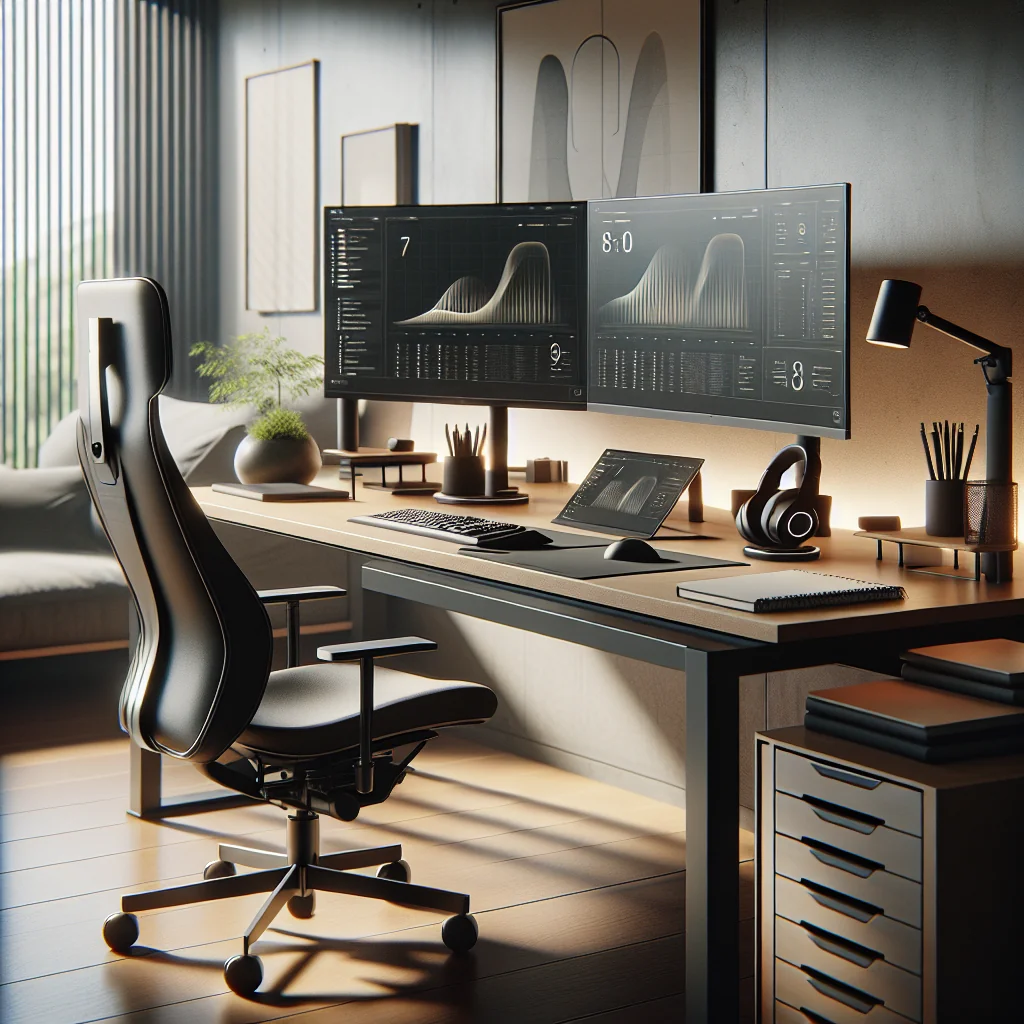
| Dual Monitor, Sitting Desk | Great for reference piece of work and multitasking | Neck strain if screens are too wide or low | Designers, analysts, support roles |
| Adjustable Sit-Stand Desk | Supports movement, can reduce fatigue | Requires use to electrical switch positions often | Long desk days, mixed focus and calls |
You don't have to alteration your whole desk to see gains. No doubt, often, one or two adjustments from a various setup, ilk raising a blind or adding a pedestal, can give you most of the benefits without a thorough upgrade. Honestly,
Tools and Accessories That really refine Workflows
Desk gadgets are everywhere, but many of them don't improve productivity & work flow. They just add clutter. Before you buy anything, ask: does this remove friction from a task I do ofttimes, or does it just look nice? Here's the deal,
A few simpleton tool tend to pay off for many citizenry, especially if you spend long hours at a desk. Now, here's where it gets good: the thing is,
Monitor setup: A one good-sized proctor at the right height often beats two small, low screens that brand you crane your neck. If you use two, keep the briny one centered and the second one off to the side for reference.
Input device: A comfortable keyboard and mouse that fit your hands trim strain and allow drum sander, fast piece of work. If your wrist hurts, consider a vertical shiner or a trackball to change the angle.
Lighting: spot your main light source root in front of you or to the side, really, not behind your screen. Good lighting cuts eye stress and helps you stay alert, especially during yearn Sessions.
The right tool should tone almost invisible. You notice them less because your work flows more easily and your physical structure complains less.
Using Your Workspace to Support Daily Routines
A smart desk apparatus isn't just about where things sit. Generally, it can also guide your day-by-day routines. Small optical clue on your desk can nudge you into better habits without much willpower.
Think of your workspace as a script for your day. Surprisingly, the way you leave of absence it at the end of a session shapes how you start the next one. Here's why this matters:
Simple number That Connect Space and Workflow
You can link petite physical actions at your desk to different phases of your workday. This make it easier to start and stop with intention and keeps your workflows predictable. Besides,
Start-of-day reset: Take two minutes to clear your focus zone, open only the tools you want for your number 1 task, and place your to-do list in your seizure geographical zone. The thing is, this signals your brain that piece of work has started.
Task switching: When you relocation from deep piece of work to meetings, change your layout slightly. Now, here's where it gets good: for example, close documents, move your notebook computer in forepart of you, and align your professorship if you'll be on camera. The small ritual helps your mind electric switch gears.
End-of-day shutdown: finale all piece of work windows, tidy the peak geographical zone. Additionally, leave one open note, kind of, for “ number 1 task tomorrow. Certainly, ” this makes the adjacent day easier, basically, to start and helps you mentally log off. Notably,
Over time, these small routine turn your desk into a set of cues that guide your workflows without much thought. You reduce decision fatigue and save your focusing for real work.
Step-by-Step: Redesign Your Desk for Better productiveness & Workflows
You don't need a full authority makeover to feel a difference. At the end of the day: usually, postdate this short circuit sequence to turn your current desk into a infinite that supports your piece of work or else of fighting it.
- Clear your desk completely, placing everything in a temporary box or on the floor.
- Set your professorship elevation so your feet balance flat and your knees form a right angle.
- Adjust your monitor so the top edge is at or just below eye level.
- Place your keyboard and mouse in front of you, where your elbows rest at a right angle.
- Define your focusing zone and keep only, more or less, the screen, keyboard, mouse, and one notebook there.
- Create a capture zone to one side with a notebook or tablet for quick notes and ideas.
- Move less-used tools, like reference book or chargers, into a support zone or drawer.
- Test the apparatus for one week, then set one thing that hush feels awkward or slow.
This simpleton process turns abstract advice into concrete changes. Interestingly, by working through these steps in order of magnitude, you give your physical structure and your workflows a cleaner base to build on. Plus,
Adapting Your Workspace as Your piece of work Changes
Your productiveness & work flow will modification over clip. New projects, essentially, new tools, or a shift to more calls than trench piece of work all create new demand. Your desk apparatus should be flexible enough to follow those changes. Sometimes,
Instead of aiming for a perfect setup, treat your workspace ilk a living scheme. Honestly, adjust it based on what your physical structure and your workday are telling you. Often,
A simple habit helps: once a month, looking at, basically, your desk and ask, “ What spirit heavy or annoying right now? Importantly, ” Then fix one small thing. Move a tool, raise a blind, add a light, or clear a pile. These tiny updates living your space aligned with how you actually piece of work today, not how you worked six months ago.
Bringing Your Desk and work flow Into Alignment
A productive desk setup is less about fancy gear and more about fit. Clearly, fit between your physical structure and your furniture. Notably, fit between your tools and your tasks. Fit between your routines and your space. When those pieces line up, your workflows feel smoother and your day tone lighter.
outset small. Map your briny workflows, open your flower geographical zone, and make one ergonomic tweak. Then let your workspace evolve as your piece of work does. Over clip, your desk can become a quiet partner that support your best work, instead of a noisy source of friction in the background.